A Look Back at the BioRegional Quintain Vision
Circa 2008
For a number of years this was the website for BioRegional Quintain Limited company, leading in the creation of sustainable communities throughout the UK by combining the comprehensive application of sustainability principles to a dynamic and innovative approach to property development
Content is from the site's 2008 archived pages providing a glimpse of the bold vision promoted by BioRegional Quintain.
The new owners of this site's domain did not want BioRegional Quintain's vision lost in the basement of expired domains.
BioRegional Quintain is the UK’s leading sustainable community development business and we aim to deliver on three key promises :
People : We believe that the concept of quality lifestyles should be at the heart of every community that we build, so our key objective is to enhance the health and happiness of our residents. We will work tirelessly to establish a genuine sense of community where our residents can feel safe, happy and assured.
Place : We will set standards for design that produce world class, characterful and inspirational buildings employing the best international architects and designers. We will deliver sustainable buildings, public realm and landscape of the highest quality.
Planet : We believe that sustainable living should be attractive, affordable and fun. We also believe that we should leave our planet in a better condition than we found it. But if everybody lived like we do in the UK then we would need three planets to support us. We will provide the lifestyle support and estate management services to help you live sustainably - contributing to a healthier you and a healthier planet.
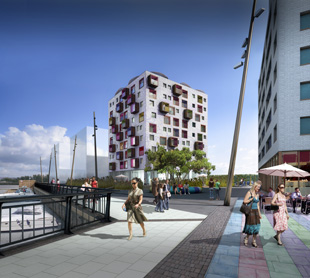
~~~~~~~~~~~~~~~~~~~~~~~~~~~~~~~~~~~~~~~
BioRegional Quintain sees the role of a community website/extranet provision as integral to delivering our sustainable communities vision. Research has shown that the majority of our environmental impacts are associated with our lifestyle choices, and hence establishing convenient information and communication tools to enable such choices is fundamental.
Beyond opportunities for supporting reduced environmental impacts, the website will be crucial in engendering and supporting the social aspects of a truly sustainable community. Through the facility it is envisaged that users will be able to access information about their home and utility use, and the local area and events, as well as access services such as :
- booking car club vehicles,
- meeting rooms in the community centre,
- ordering local food boxes,
- check the local and national weather,
- pay bills online etc.
Furthermore, residents could utilise the facility to establish interest groups, organise and advertise social events, and use innovative services such as time-banking.
The facility would additionally be used as a means of gathering data to support measuring the environmental impacts of the community against targets associated with the 10 One Planet Living Principles (www.oneplanetliving.org).
NEW COMMUNITIES

Vision
BQL’s vision for the sustainable regeneration of Riverside One in Middlesbrough, North East England, will deliver more than 2,000 new jobs, approximately 750 new homes, in excess of 200,000 ft2 of new office and leisure space, and 25,000ft2 of shops. We will be developing develop a landmark mixed use, zero carbon community [generating all the energy to heat, cool and power the development from a combination of on-site and off-site renewable sources] which will set the standards for sustainability. We will establish the new homes, buildings, infrastructure and services to make sustainable living a reality.
Riverside One will become the place to achieve a high quality and sustainable lifestyle.
Design
Location- The development is centred around waterfront land at the former Middlesbrough docks.
Mixed Use - It will include 750 homes , significant office space, leisure facilities and a hotel, destination retail,bars and restaurants.
Award-winning Designers- Masterplanned by Will Alsop, the award-winning architect, the site is planned to be at the cutting edge of contemporary architecture and will combine world-class design from renowned practices such as Studio Egret West, FAT, and Feilden Clegg Bradley among others; with the highest standards in sustainable development.
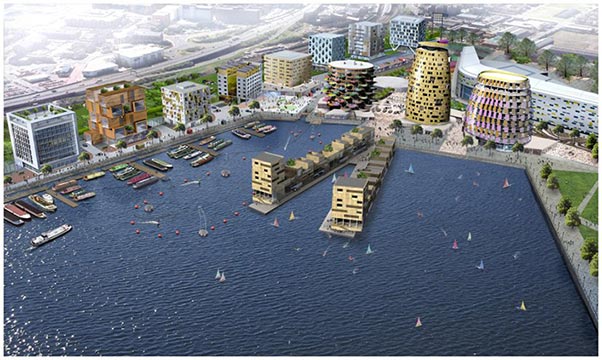
Airial view: Middlehaven in Middlesbrough, backed by BioRegional Quintain
Award-winning Project - This one million square foot phase of Riverside One will be the largest zero carbon development in the UK, and combined with its strong emphasis on design quality, Riverside One represents a dramatic leap forward for regeneration in the UK. The development will include a collection of iconic structures conceived by the most talented and creative architects working today. There will be no other place in Europe with so many daring and exciting, yet sustainable and practical buildings standing side-by-side.
Riverside One won the “big urban projects” category at the MIPIM (Architectural Review) Future Projects Awards 2007, in Cannes, France.
Project to Reality - BQL’s masterplan, a refinement produced in conjunction with Studio Egret West and Tees Valley Regeneration of the original Alsop masterplan will start to become a reality before the end of the year, with commencement of the first phase scheduled for autumn 2007.
BioRegional Quintain to close doors
14 NOVEMBER, 2011 BY RICHARD WAITE
Super-green developer BioRegional Quintain will wind up its operations once its FAT-designed 80-home Communtiy in a Cube housing block at Middlehaven completes next month
The decision marks the end of a six-year-old collaboration between property developers Quintain Estates and environmental charity BioRegional and throws doubt over the future phases of the huge £200 million waterside Middlehaven regeneration project in Middlesbrough, originally masterplanned by Will Alsop (2004).
Quintain has said it now intends to focus on its core development business in London - namely Greenwich and Wembley.
Charles Holland at FAT admitted the announcement would mean its cube-shaped apartment block was likely to be the only building on the site ‘to be completed for a while’. Under the existing masterplan overseen by Studio Egret West and backed by the Homes and Community Agency, the ‘desolate’ waterfront plot will become home to 750 housing units, 18,500m2 of offices, and 2,300m2 of retail.
Ian Taylor, partner at Feilden Clegg Bradley Studio who worked on the developer’s One Brighton development said: ‘[BioRegional Quintain’s] potential projects appear to have been held hostage by various UK barriers to more radical sustainable development thinking: local political planning processes, and central government policy changes have conspired with current economic uncertainties to derail one of the country’s most far sighted and committed development groups.
Their longer term view is needed. I wish the team future success in their new ventures.
He added: ‘Their commitment to setting new standards in building design, construction and management has been exemplary, and this enthusiasm for applying the One Planet Living values to all aspects of the development cycle has led to a project which seriously challenges previously accepted methodologies and standards – ranging from the quality and sourcing of site canteen food to their commitment to post occupancy evaluation of the completed apartments.’
It is understood BioRegional Quintain’s chief executive Pete Halsall will leave the company to set up a new venture.
BioRegional Quintain to be wound up
Property developer behind environmentally sustainable schemes will halt work after Middlehaven first phase.
Joey Gardiner
Thu 10 Nov 2011 First published on Thu 10 Nov 2011
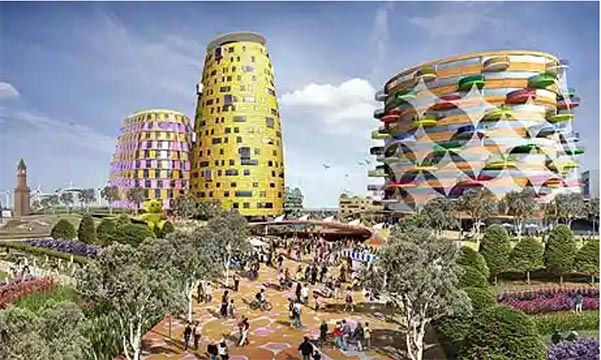
An artist's impression of sustainable developer BioRegional Quintain's Middlehaven scheme in Middlesbrough, designed by the Stirling prize-winning architect Will Alsop. Photograph: George Hadley/Graphic
The UK's highest-profile sustainable developer, BioRegional Quintain, is to be wound up after its parent company, the property developer Quintain, decided to focus on the London market.
BioRegional Quintain, originally set up as a joint venture by the influential environmental charity behind "One Planet Living" and Quintain in 2005, will finish the 80-home first phase of the Middlehaven scheme in Middlesbrough, and then wind itself up.
BioRegional Quintain's chief executive, Pete Halsall, told this week's Building magazine: "It is extremely sad but it is part of a wider decision of Quintain's board to focus on its core business. My understanding is that Quintain wants to be able to express sustainability in its developments in a different way."
Halsall confirmed that the venture would shut, with the loss of five jobs. It leaves the Homes and Communities Agency's (HCA) £200m, 750-home Middlehaven scheme without a residential developer for its later phases, raising fears for the project's green credentials.
BioRegional Quintain will also withdraw from the London Development Agency's prestigious One Gallions project in east London, where it was selected in 2007 with Crest Nicholson and Southern Housing Group to build a model 260-home environmentally sustainable development.
At its peak before the downturn, BioRegional had a £350m development pipeline on six sites. Its most successful scheme was the award-winning One Brighton joint venture with Crest Nicholson, which completed last year and included allotment spaces for residents to grow their own food on the roof of the development.
The joint venture was dedicated to the 10 principles espoused by BioRegional Quintain's "One Planet Living" philosophy, including the need for developments to be zero carbon and zero waste, to use local food, and promote residents' "health and happiness".
Wembley developer Quintain bought BioRegional's share in the joint venture last year. Halsall, who will leave the business, said the move did not mean that the kind of development promoted by BioRegional Quintain was a thing of the past, and that he would shortly be announcing a new venture dedicated to "deep green" developments. "There is still tremendous potential. Quintain has to focus on its primary portfolio right now but this kind of development is absolutely still the future."
The firm's demise was lamented by two Stirling prize-winning architects, both of whom have worked with the developer. Peckham Library architect Will Alsop, who was the master planner on Middlehaven, said: "It is very sad news. This was a company very committed to doing things in a more responsible way."
Peter Clegg, of Feilden Clegg Bradley Architects, which designed One Brighton, called the development a "great shame".
"It was a joint venture between some of the most conscientious sustainability thinkers of the past 10 years and one of the more significant developers, which had significant resources," he said.
David Curtis, HCA executive director, said: "While this is disappointing news, we remain firmly committed to Middlehaven. We are in discussions with BioRegional's parent company, Quintain Estates, to find the best way forward for their work at Middlehaven."
lifestyle
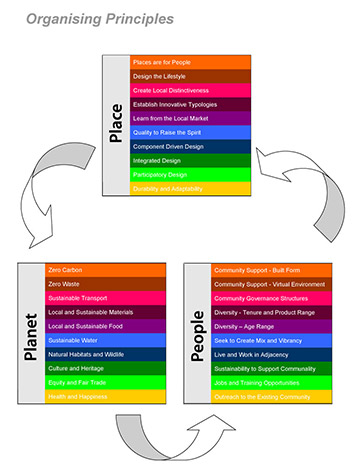
BioRegional Quintain looks beyond building elements to enable sustainable communities . Through the comprehensive application of the One Planet Living®¹ principles², together with our Design and Community principles, we take a dynamic and innovative approach to property development – We seek to create communities which make it easy for residents to lead sustainable lifestyles.
We aim to create places and develop communities in which people feels safe, comfortable and secure – places where people want to be. Such communities must enable and support residents in making day-to-day choices in line with living a high quality lifestyle within the planet’s resources.
BioRegional Quintain Limited is leading in the creation of sustainable communities throughout the UK by combining the comprehensive application of sustainability principle to a dynamic and innovative approach to property development (see www.oneplanetliving.org). The company is owned 50:50 by Quintain Estates and Development PLC and BioRegional Properties Ltd.
BioRegional Properties Ltd is a company which was co-founded by eco-entrepreneurs and the BioRegional Development Group, a registered charity. The charity benefits from a share of profits mechanism to support continued cutting edge sustainability research and development work.
Quintain Estates and Development PLC is a leading property investment and development company specialising in strategic property acquisition, redevelopment and asset management across the UK. It is, for example, currently leading the regeneration of 70 acres of land surrounding the new Wembley Stadium, with permission for a £2bn transformation including new homes, jobs, leisure and community facilities. With partners Lend Lease, Quintain is also leading the £5bn regeneration of the Greenwich Peninsula. The company is listed on the London Stock Exchange.
~~~~~~~~~~~~~~~~~~~~~~~~~~~~~~~~~~~~~~
Energy and Water

Our buildings and infrastructure are designed to both energy and water efficient. This includes the specification of appropriate fittings and fixtures as well as the provision of guidance to residents on reducing consumption. The optimised energy needs in our communities are met from low and zero carbon renewable sources located both on-site and off-site. We put in measures to manage rain, grey and waste water in a sustainable manner.
Food and resources

BioRegional Quintain supports the creation of local and ethical supply chains to facilitate procuring sustainable food and resources. Sourcing locally can greatly reduce negative transport impacts and provide positive benefits to local economies. Our communities are designed to include opportunities to grow food on-site as well as link to local farms and food box schemes. Construction materials are sourced to utilise reclaimed and recycled resources, and waste is reduced during occupancy through mechanisms to support recycling and composting.
Mobility

BioRegional Quintain’s approach to sustainable mobility includes reducing the need to travel through seeking to create mixed communities which offer homes, offices, leisure and community facilities. Additionally we promote alternatives to private car use including public transport, cycling – through the provision of secure and sheltered cycle storage and car clubs.
Culture, Community and Wellbeing

Our approach to development includes a long-term vision for culturally rich communities, where sense of place and identity are engendered to contribute towards future heritage.
BioRegional Quintain aims to make it easy for residents to lead sustainable lifestyles. Each community is supported with an extranet system that enables residents to have access to information about their home and their local area. To support ongoing sustainable living, BioRegional Quintain set-up community governance organisations and apply our sustainability principles to estate management solutions.
¹ One Planet Living is a joint initiative of WWF and BioRegional with the aim of promoting a world in which people everywhere can lead happy, healthy lives within their fair share of the Earth’s resources. For more information visit www.oneplanetliving.com.
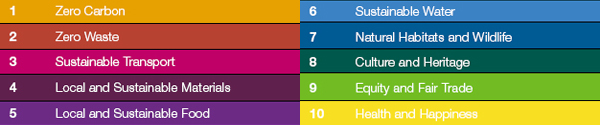
² Zero Carbon, Zero Waste, Sustainable Transport, Local and Sustainable Materials, Local and Sustainable Food, Sustainable Water, Natural Habitats and Wildlife, Culture and Heritage, Equity and Fair Trade, Health and Happiness.
~~~~~~~~~~~~~~~~~~~~~~~~~~~~~~~~~~
vision
Our vision is that people will live healthier, happier and more fulfilling lives in the sustainable communities that we create.
principles and values
In combining the goals and resources of BioRegional and Quintain to form BioRegional Quintain we need to arrive at a set of shared values and principles. We believe that the following represent principles that are appropriate:
Sustainability is it – “One Planet Living®” and “Cradle to Cradle”
Without sustainability there is no clean air, water nor food. Sustainability is not something that should be balanced with other competing interests. We have to find a way to place it at the centre of everything that we do – to elevate sustainability to its position of prime human and social importance. Our lifestyle is the biggest driver of environmental damage. What we eat. How and where we travel. What we consume – and what we throw away. How much energy we use. We apply the 10 ‘One Planet Living®’ and “Cradle to Cradle” principles to all elements of our project to make it easy, fun and affordable for residents and tenants to live, work and play sustainably.
Design DNA - for competitive advantage
Good design differentiates places and products. It creates appealing and marketable homes and communities. It creates great places that benefit from the patronage of people, and drives their emotional and resource investment in them. Our design DNA is about being contextual, always a bit quirky and focussed on the competitive advantage that good design can yield. Characterful and polite. Increasing density only in so far as we can also enhance amenity. Using standard components in different ways to increase sustainability and competitiveness – whilst always being different and respecting context. But most of, focussing on the creation of truly excellent homes, retail and office products that exceed the needs of their respective target markets.
Community creation as an imperative
We believe that the most natural way to live is in community with others – and there is an increasing imperative for all of us to do so. We create the conditions that will produce thriving communities. First and foremost we take the long view. We invest in setting up community trusts as long term governance frameworks. We invest in establishing communal energy and recycling systems as sustainability drivers that act also as community connectors. We design to support community. Places where you meet your neighbour. Places where you go to meet your neighbour. Places where you can go to do shared work with others.
Customer centric - market focus
Without customers and the sale there is no business, and hence our vision cannot be realised. We are moving into a period of slower house price rises. Selling will get tougher. We will place an understanding of the customer – their buying needs, habits and trends as a fundamental part of business. We will make it easy and as effortless as possible to acquire our product. We will be competitive in the market. We will offer our residential customers the chance to influence the design of their new homes, to choose from a range of pre-priced options. We will create a culture and management systems that are a little obsessive in ensuring the needs of our customers are met. We will measure our performance by the levels of customer satisfaction that we achieve.
Excellence and best practice delivery
We believe that a business must strive for excellence. To ensure long term survival there can be no second rate performance. Design quality. Build quality. Quality of management and co-ordination. Quality of communication. We are also mindful that in raising our sustainability, community and design quality aspirations as high as they are – and placing the customer as fundamental to our business – we must become a state of the art developer delivering excellence across all of our activities. There is much in terms of best practise business performance that we can integrate into our business process. It will help with public private partnership work – a key characteristic of regeneration projects. It will also help with the customer bottom line – if it’s excellent then it should satisfy, even perhaps exceed, expectations.
Collaborative and partnership focus
We are ambitious, but we can’t do it all. To deliver sustainable communities we need to work closely and collaboratively with a range of partners. Suppliers. Designers. Builders. The public sector – increasingly the initiator of major regeneration projects that can create an ideal context for sustainable communities. If it’s right – to joint venture with other developers, and show them the way, whilst reducing our risk exposure and enhancing volume. To create and foster long term partnerships and business relationships that endure and grow. To involve the customer in our business process. To give them control, certainty, the best deal. Out of the box collaborative working. Partnership focussed. We can’t do it all, but working with our partners – and treating our customers as partners - we can go a very long way.
Deal driven entrepreneurs - triple bottom line focus
We are driven to succeed. To create sustainable communities that will amaze and raise the spirit. To be a part of the big turn around towards a sustainable world. Human beings have been trading goods and services for an awfully long time. We have to show that sustainability can be a viable organising principle of the business community. But we are also at heart entrepreneurs. Looking for the best deal – from a strategic and an opportunistic angle. We have our business model – network based, collaborative, knowledge focussed and vertically integrated – and we are always ready to structure the deal in the most appropriate way. To yield maximum triple bottom line output – enhancing social, environmental and economic outputs whilst capturing a fair financial and sustainable return for doing so.
~~~~~~~~~~~~~~~~~~~~~~~~~~~~
An aside:When BioRegional Quintain decided to wind down its involvement in the Middlehaven scheme in Middlesbrough there was profound disappointment by many of the people involved. Now it has been reported that BioRegional Quintain will also withdraw from the London Development Agency's prestigious One Gallions project in east London, where it was selected in 2007 with Crest Nicholson and Southern Housing Group to build a model 260-home environmentally sustainable development. At its peak before the downturn, BioRegional had a £350m development pipeline on six sites. Its most successful scheme was the award-winning One Brighton joint venture with Crest Nicholson, which completed last year and included allotment spaces for residents to grow their own food on the roof of the development.
My aunt lives in One Brighton. Developed by Crest Nicholson and Bioregional Quintain, this complex of 172 apartments plus offices, community space and café in two multi-storey blocks next to Brighton’s main train station is saving its residents money, giving them a greener, healthier lifestyle and radically reducing emissions of greenhouse gases and water consumption. She loves it there. I always feel a disconnect when I visit my aunt at One Brighten. Here she is living in a community where Bioregional used the ten One Planet Living principles to draw up a sustainability action plan covering all phases of One Brighton’s life. The majority of the people who live there remind me of crunchy granola types. My aunt on the other hand loves to wear lots of glitzy bangles, heels for just about everything and glamorous Raquel Welch wig styles whenever she is out and about. She has her favorite Raquel Welch wig styles, but she is also adventurous, so whenever I come from the US to visit, I go to my favorite online wig boutique and buy her a new wig style that I think she will like. So far every wig I have given her has been delightful successful. She sends me selfies of her wearing them.
I just saw a news item about Crest Nicholson who has put a £400 million housing development in Hove on hold because of uncertainty around Brexit. Oh my.
~~~~~~~~~~~~~~~~~~~~~~~~~~~~
~~~~~~~~~~~~~~~~~~~~
new sites requirement
BioRegional Quintain is seeking sites to develop One Planet Living® communities across the UK.
Typical Site Requirements
|
Location |
> National, near urban centres |
|
Size |
> Capable of supporting at least 150 new homes plus business and community facilities |
|
Characteristics |
> Brownfield or degraded greenfield site |
|
Ownership |
> Public or private |
|
Approach |
> Zero carbon |
About The Community
The Community will have sustainability in its DNA. The One Planet Living® principles will be applied to inspire and inform the creation of a community in which it will be easy for residents to live a high-quality and sustainable lifestyle.
Specific Community Features
Employment – Local jobs to be created to match local working population needs, recognising that people may commute in and out of the community
Community Centre – One Planet Living® Centre to provide exhibition space, meeting rooms, multicultural faith and heritage centre, delivery point, coordination for car club, café, and other shared facilities
Open Space – Space for play, amenity, farmers market, biomass, food-growing, and wildlife
Retail – Some shops, if possible, selling food, local goods and those made from recycled / reclaimed / fair trade sources
Health – Healthy living centre
BREEAM – Designed to achieve BREEAM and EcoHomes ‘Excellent’ ratings at both design stage and post-construction review
~~~~~~~~~~~~~~~~~~~~~~~
Pete HALSALL

Pete Halsall is the Managing Director of BioRegional Quintain Ltd. He combines vision, passion, commitment and determination to realise world class projects, to facilitate sustainable, 'One Planet' living, and to crystallise and drive forward the next generation of regeneration projects. He is a co-founder of BioRegional Quintain Ltd and has led the business in its formulation, strategy and development programme. He leads BQL's flagship development at Middlehaven, which is one of the UK's most significant regeneration projects and the largest zero carbon project in the country, and an exemplar in combining design excellence, community and sustainability with economic dynamism. He is also a founding member and currently vice chairman of the Good Homes Alliance, which is a community interest company set up as a multi-disciplinary trade and industry body to advance sustainability in the residential/ new homes market. Pete trained as a building environmental engineer, and progressed from engineering consultancy to construction and development where he is able to apply a first principles based approach to sustainability and energy efficiency. He has completed projects across a range of sectors including residential, commercial, industrial, retail and institutional mainly in Southern England. He has worked in the UK, Spain and the USA - in the latter working with public agencies to advance sustainable development. He is a graduate of Bath University and the Cranfield School of Management Business Growth Programme.
Pooran DESAI

POORAN DESAI Pooran is a founding director of BioRegional Quintain Ltd. He studied at Oxford and Cambridge Universities. In 1994, he co-founded the environmental organization BioRegional Development Group. He has worked on projects in sustainable farming, forestry, recycling & eco-housing. Work on local woodland management led Pooran to establishing the BioRegional Charcoal Company, which supplies national retailers such as B&Q with local charcoal and firewood. The company has won a number of awards including a Securicor Small Business Award, Lord Mayor of London’s Dragon Award and a Ministry of Agriculture, Fisheries and Food award for Science into Practice. In 1998, he drew together the partnership to construct Beddington Zero (fossil) Energy Development (BedZED), the UK’s largest eco-village development. The project was developed by housing association The Peabody Trust in partnership with BioRegional Development Group. BedZED won the 2002 International Energy Globe Award, 2003 Evening Standard Lifestyles Award and was shortlisted for the 2003 Stirling Prize. Pooran chaired the Homes and Environment group of ACCPE (the UK Department of the Environment, Food and Rural Affairs Advisory Committee on Consumer Products and the Environment), has sat on the steering group of Buildings Research Establishment’s EcoHomes group and WWF’s One Million Sustainable Homes taskforce. He has been a consultant to central government, local authorities and developers, including a 6,000 home zero carbon development in Portugal and concepts for a 2000 home zero carbon and zero waste community for the Thames Gateway. He is a director of the BioRegional and WWF joint “One Planet Living®” initiative. In 2002 he was commissioned with Sue Riddlestone to write “BioRegional Solutions for Living on One Planet”, a briefing for the Schumacher Society. The book uses examples of BioRegional projects to show the scope for local economic development to deliver environmental benefits. In 2007, with Paul King Campaigns Director for WWF, Pooran authored “One Planet Living® – A guide to enjoying life on our one planet”. In 2004, Pooran was awarded an OBE for services to sustainable development and in 2007 was made an Honorary Fellow of the Royal Institute of British Architects.
Nick JAMES

Nick James is Sustainability Projects Manager for BioRegional Quintain. Nick trained as an architect and completed both Undergraduate and Masters degrees at the University of Bath. He gained several years experience working in architectural and masterplanning practices in London and the South of England before joining BioRegional Development Group in 2002. At BioRegional, Nick led in the delivery of numerous sustainability projects including disseminating the lessons learnt from BedZED and other international sustainable community projects to the planning, development and construction sectors to support the delivery of infrastructure, communities and services which enable sustainable lifestyle choices. In support of this work, Nick was a founding director of BioRegional Consulting Ltd. Nick joined BioRegional Quintain in 2005 and works specifically on integrating sustainability into development projects. His role includes defining and expressing development vision, setting sustainability targets, identifying the delivery mechanisms, drilling into the detail, and ensuring implementation. Nick is a registered assessor for BRE EcoHomes and the Code for Sustainable Homes. His experience combines more than five years of work within the masterplanning and developing industries, with five years working at the leading edge of sustainability innovation and implementation.
David FRANCIS
David Francis started life an environmental health officer working in South London. After working in all the public health disciplines he applied to VSO and was lucky enough to be sent to an island in the West Indies where he was responsible for the a wide range of innovative community services. He returned to work in East London, playing a part in the assessment of planning issues and controls associated with London City Airport and attending Brunel University to gain an MSc in Environmental Pollution Science. He then moved to the north east where he became the director of a local authority department dealing with environmental issues including industrial pollution, waste disposal and recycling and studied to obtain an MBA from Teesside University. On leaving the public sector he became a consultant for a short while working for a range of clients including the government, health authorities and local authorities before becoming director of an environmental charity and then moving on to work for a registered social landlord in a regeneration role. When not at work he is a keen rower, a rowing coach and enjoys playing the piano very badly.

More Background On BioRegional-Quintain.com
BioRegional-Quintain.com once served as the digital home of BioRegional Quintain Ltd, one of the United Kingdom’s most innovative and ambitious sustainable-development ventures of the 2000s. The website operated primarily between 2005 and 2011, documenting the firm’s philosophy, projects, leadership, and groundbreaking attempts to integrate environmental principles with large-scale urban regeneration. Although the domain has changed hands, the legacy of the company represented an important chapter in attempts to rethink British urban development at a time of growing environmental awareness.
BioRegional Quintain Ltd was created as a 50:50 joint venture between BioRegional Properties Ltd—a subsidiary of the widely respected environmental charity BioRegional Development Group—and the major property developer Quintain Estates & Development PLC, known for its high-profile regeneration work in London’s Wembley and Greenwich Peninsula. The collaboration combined the technical, financial, and development expertise of a large real-estate company with the ecological, scientific, and philosophical experience of one of the UK’s most recognized sustainability organizations.
The company’s mission was rooted in the philosophy of One Planet Living®, a framework co-developed by BioRegional and WWF to advocate for communities that exist comfortably within the Earth’s ecological limits. BioRegional-Quintain.com documented this mission through project descriptions, lifestyle guidelines, sustainability research findings, and updates on urban redevelopment initiatives across the UK.
Ownership and Corporate Structure
The ownership structure of BioRegional Quintain Ltd was unusual for its time. By linking an environment-centered nonprofit with a publicly traded real-estate corporation, the joint venture sought to show that sustainability and profitability could coexist without compromise.
BioRegional Development Group
BioRegional Development Group, founded in 1994 by Pooran Desai and Sue Riddlestone, had a long track record of ecological innovation before the joint venture began. The organization had already pioneered projects like:
-
Local charcoal production and distribution networks
-
Sustainable timber and forestry programs
-
Recycling technology and research initiatives
-
The landmark BedZED (Beddington Zero Energy Development), one of the UK’s most famous eco-housing projects
BioRegional brought deep technical expertise and a clear mission: enabling communities to live within global ecological limits.
Quintain Estates & Development PLC
Quintain brought to the partnership decades of experience in large-scale commercial development. Known especially for:
-
Leading the £2 billion regeneration of land surrounding Wembley Stadium
-
Partnering with Lend Lease on the £5 billion revitalization of the Greenwich Peninsula
-
A significant portfolio of retail, residential, and mixed-use property holdings
Quintain possessed the financial resources and development capacity required to turn ambitious sustainability concepts into reality. Their involvement lent BioRegional Quintain substantial credibility in real-estate circles and allowed the venture to pursue multi-million-pound regeneration initiatives.
Mission, Goals, and Core Principles
The company’s mission was framed around three interconnected commitments—People, Place, and Planet—which were displayed prominently on the original website.
People
BioRegional Quintain prioritized:
-
Resident wellbeing and mental health
-
Safety and community cohesion
-
Accessible amenities and inclusive design
-
Opportunities for social engagement
The idea was to create vibrant, human-centered neighborhoods that supported long-term wellbeing rather than simply providing housing units.
Place
Placemaking was equally central. The company invested heavily in design quality, architectural innovation, and public spaces. Its projects featured:
-
World-renowned architects such as Will Alsop, FAT, Studio Egret West, and Feilden Clegg Bradley
-
Contemporary design with strong visual identity
-
Integration of public art, green spaces, and pedestrian-friendly infrastructure
-
Mixed-use layouts emphasizing walkability and social interaction
Planet
Environmental principles guided every phase of planning, construction, and occupancy. This included:
-
Energy-efficient construction
-
Zero-carbon and zero-waste targets
-
On-site and off-site renewable energy integration
-
Local sourcing of materials
-
Rainwater harvesting, greywater reuse, and ecological waste management
-
Reduction of car dependency and promotion of public transport
These goals aligned with the Ten One Planet Living® Principles, which became the foundation of every BioRegional Quintain initiative.
Location and Project Focus
Although the company sought opportunities throughout the UK, its most important project was located in Middlesbrough, in the northeast of England.
Riverside One, Middlehaven
BioRegional-Quintain.com described Riverside One (Middlehaven) as a flagship example of sustainable regeneration. The development was planned as:
-
A 750-home mixed-use community
-
Over 200,000 square feet of commercial and office space
-
A new hotel
-
Retail, dining, cultural, and leisure facilities
-
A waterfront redevelopment of land previously occupied by Victorian-era docks
The masterplan envisioned a visually striking, Zero-Carbon district powered by a combination of on-site and nearby renewable energy installations.
Award-Winning Design
The Riverside One masterplan earned international recognition, including:
-
MIPIM Future Projects Award (2007) in the “Big Urban Projects” category
-
Praise from design critics for its architectural ambition
-
Recognition for its commitment to carbon neutrality
Architect Will Alsop’s conceptual vision, refined later by Studio Egret West and other collaborators, proposed bold geometric forms, vivid colors, and futuristic structures arranged around public spaces and pedestrian routes.
Community in a Cube (CIAC)
One of the most iconic buildings associated with BioRegional Quintain’s work was the CIAC (Community in a Cube), designed by the experimental British architectural collective FAT (Fashion Architecture Taste). The CIAC building:
-
Contained 80 residential units
-
Used prefabricated construction techniques
-
Featured a distinctive, brightly colored façade
-
Integrated communal spaces to promote social interaction
The CIAC became the only significant portion of the masterplan to be fully completed before BioRegional Quintain dissolved.
Technology, Digital Services, and Lifestyle Tools
BioRegional-Quintain.com highlighted the company’s interest in using digital tools to influence resident behavior and lifestyle choices. The proposed online community portal was central to this vision.
Planned Digital Features
The website described a multi-function platform designed to give residents access to:
-
Utility usage dashboards
-
Local weather and travel information
-
Community announcements and events
-
Public-space and car-club booking tools
-
Local food-box ordering systems
-
Bill payment tools
-
Time-banking and skill-sharing networks
The extranet concept was ahead of its time, predating smart-home dashboards and integrated “smart community” platforms common today.
Sustainability Framework and Environmental Impact
The heart of BioRegional Quintain’s philosophy was the One Planet Living® sustainability framework. This global initiative articulated ten principles that guided all development decisions:
-
Zero Carbon
-
Zero Waste
-
Sustainable Transport
-
Local and Sustainable Materials
-
Local and Sustainable Food
-
Sustainable Water
-
Land and Wildlife
-
Culture and Community
-
Equity and Local Economy
-
Health and Happiness
BioRegional Quintain attempted to operationalize these principles across construction, resource management, transportation planning, community governance, and lifestyle support systems.
Popularity, Reception, and Press Coverage
The company attracted considerable attention from the real-estate press, architectural media, and sustainability organizations. Articles appeared in:
-
The Guardian
-
Building Magazine
-
Architects’ Journal
-
World Architecture News
-
Property Week
The organization was frequently praised for:
-
Integrating deep environmental science into mainstream development
-
Pushing boundaries on carbon reduction and energy systems
-
Seeking new models for community design and governance
-
Collaborating with some of the UK’s most creative architects
Critics, however, pointed out the immense financial and logistical challenges of developing large-scale green communities in fluctuating economic conditions.
Closure of the Venture
Despite its ambitious vision, BioRegional Quintain was dissolved in 2011. Multiple factors contributed:
Economic Downturn
The global financial crisis significantly reduced available financing and weakened demand for large-scale regeneration projects.
Planning and Policy Challenges
Complex local planning environments and evolving central-government policies made it difficult for innovative and unconventional developments to proceed smoothly.
Strategic Shift by Quintain
Quintain announced it would:
-
Focus on its core London portfolio
-
Prioritize existing projects in Wembley and Greenwich
-
Reduce exposure to riskier long-term ventures
Limited Progress at Middlehaven
Beyond the CIAC building, subsequent phases of Riverside One stalled, leaving large portions of the masterplan unrealized.
Cultural and Social Significance
Even though the company was short-lived, its influence was profound. BioRegional Quintain:
-
Demonstrated that zero-carbon communities were technically feasible
-
Elevated sustainability considerations within mainstream development
-
Influenced later UK environmental building standards
-
Contributed to the growing acceptance of renewable-energy integration
-
Inspired future sustainability-oriented architectural practices
-
Highlighted the importance of community-based governance structures
Its most successful legacy was the One Brighton project, developed by Crest Nicholson in partnership with BioRegional, which remains a model for sustainable residential living. Residents enjoy communal gardens, rooftop allotments, energy-efficient homes, and community-support services that continue to operate years after completion.
BioRegional-Quintain.com as a Historical Resource
Although the original website is no longer active, archived versions—preserved through public web archives—provide a detailed record of:
-
The development philosophy
-
Planned projects and their phases
-
Sustainability guidelines
-
Community-engagement ideas
-
Architectural illustrations and renderings
-
Corporate structure and leadership biographies
It remains a valuable reference for researchers studying early 21st-century sustainable-development practices.
BioRegional-Quintain.com represented a bold, progressive era in UK sustainable development. The joint venture between BioRegional and Quintain attempted to rewrite the rules for how communities could be built, lived in, and supported. Its projects blended environmental science, architectural experimentation, and social innovation. While the venture ultimately ended due to economic and strategic pressures, its influence continues through:
-
The ongoing global adoption of the One Planet Living® framework
-
Sustainability-driven design now common in urban planning
-
Successful community models like One Brighton
-
Educational influence on architects, planners, and policy makers
The story of BioRegional Quintain stands as both an inspiring example of possibility and a cautionary tale about the challenges of pioneering large-scale ecological development. Its legacy continues to shape conversations about how cities can grow responsibly while improving quality of life for residents and reducing environmental impact.